Weaning foals
Weaning is often an event that causes breeders or owners to worry. Most foal injuries, accidents and loss of condition happen during weaning. The mare also suffers a loss and is often uncomfortable with a lot of milk in her udder.
 |
| Vedete de Itajoana and foal |
When should it be done?
There is no set timeframe, but the usual answer is 4-6 months. In the wild, the mother will often let the foal nurse until the next foal is born. However, at four months, much of the foal’s nutrition is coming from grass, hay and grain, not mother’s milk. The weaning timeframe may depend on the situation. Often, if you have more than one foal, it makes sense to wean them all at once, so some may be 5 ½ months old and some 7 months old. Weaning sooner is also situation-dependent. We had one foal that seemed to be lactose-intolerant. Although healthy, he had bouts of diarrhea. It was in his best interest to wean early.
How should it be done?
There are many approaches to weaning, but this is our approach. We found it to be humane to both mare and foal. There was little or no stress to them and therefore, we were happy too. Perhaps our timeline could be shortened, but it worked for us. We use a method called fence-line weaning. Fence-line weaning is an option in which mares are moved to one side of a strong fence while foals are left on the other side
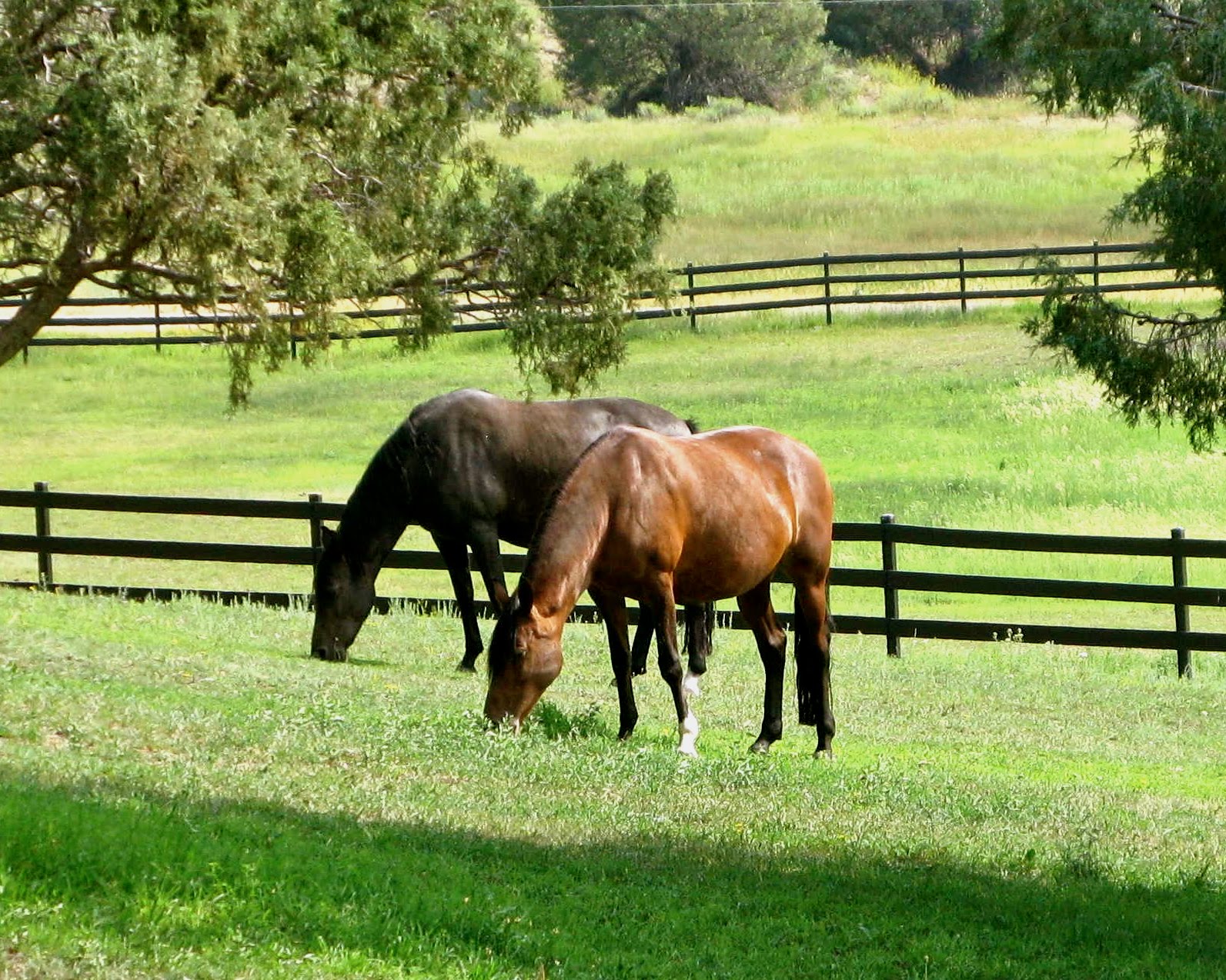
For the first week, we separate the mares and foals for eight hours in abutting pastures. Our fencing allows the foals to nurse. The mare needs to cooperate to make this event happen, so we have seen that the mares only approach the fence when their udders are full. But the foals can see, smell and hear the mares and vice-versa. During the second week, they are separated 24/7, still along a fence where they can nurse. During this week, I really watch to see how much nursing is still going on and how full or empty the mares’ udders are. In almost every case, they have stopped nursing. Week 3 they are separated by a pasture, so they are still visible, and if any nursing was occurring, they can no longer nurse.
A study at Texas A&M University showed that foals weaned in this manner showed less whinnying and running than foals separated by other methods. Levels of cortisol, a hormone that indicates level of stress, were lower in fence-weaned foals than in foals suddenly separated completely from their mothers.